Thursday, 17 March 2011

Times New Roman


Times New Roman was designed by Cameron S. Latham at Monotype in 1931 and later commissioned by "The Times" newspaper. Monotype was purposely set to design a typeface to replace The Times' font, which had been criticised as being outdated and not being typographically professional enough. The advertisement designers Morison and Latham worked on a new typeface together, using Plantin as a base.


On the 3.10.1932 it was first printed in The Times newspaper and after one year it was available as a public font. It remained The Times font for 40 years but had to be altered due to format and production changes. However the new designs were all related to the Times New Roman type. It soon became a default font and was also commonly used for many official documents.


Times New Roman was "the" typeface for decades and there are now many different variations of it. However the modern development of design is taking typography far away from serif fonts, and Times New Roman's overuse during popularity now mean that it is a 
no-go for any designers.

Comic Sans


ComicSansSpec3.svg


The script typeface Comic Sans MS was designed by Vincent Connare and published 1994 by Microsoft Corporation. It was inspired and modeled after fonts used in American comic books. It mas meant to imitate the font style used in comic books for informal texts. Only few years after its release, in 1996 it became a default font for Microsoft computers. One of its closest relatives is the Chalkboard typeface, also in clear and clean script. 


Despite being a fairly young typeface, it has already been through phases of high popularity for its friendly and rounded scripted shapes. These friendly and curvy shapes make it very child friendly, as the similarity to the "standard" neat handwriting gives it a high legibility and it was used a lot in schools. It soon reached high popularity and was used a lot, often for things it had not been intended to.


Eventually this lead to the BAN COMIC SANS Movement. Its constant overuse even for matters of seriousness, for which it was inappropriate, lead to it almost becoming a nuisance. In 1999 two U.S. graphic designers created the "Ban Comic Sans" website, stating the typeface should match the tone of its text, i.e. not hold a serious or factual text.

Monday, 7 March 2011

little bit on the history of type


I dont really have much on the history of type yet- and this is actually a vital part of my research- I think it's about time to look into this.

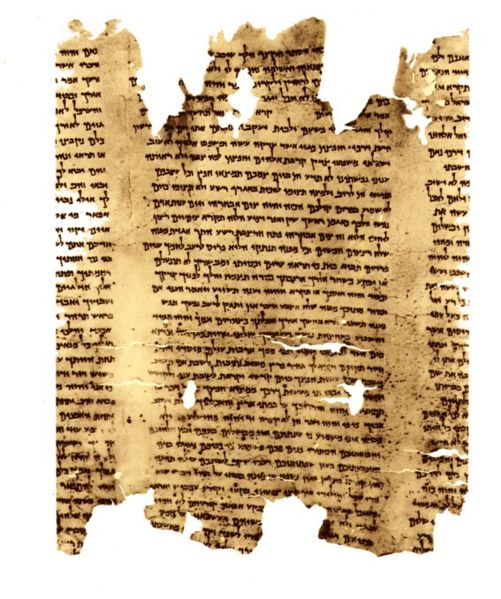
Roughly looking at the main chapters and changes in type, I think I can vaguely separate epochs into

  • the ancient carvings ca. 4000 BC - ca. 100 AD
  • early handwriting from around 0 AD, evolving until the middle ages ca. 15. century
  • the breakthrough of Gutenberg's printing press and it's huge impact on type and communication in general (Gutenberg bible and how writing was now no longer just exclusive for royalty)
  • how writing became the new standard form of communication for everyone
  • when writing became digital - first computers, then moving and animated type


Saturday, 26 February 2011


I found this image whilst browsing for information and images on my essay topic relating to our perception of communication. And even though the concept of this image is a bit different, its yet the same principle of us relating things to other objects because society and our upbringing has taught us to. I.e. children are taught that rough and sketchy representations in books are animals; even though they are actually quite far off reality. Despite that though, our brain makes the connection between the differences automatically, e.g. if we see a table on a poster we see it as a chair, not as ink on paper. 
Hence the image above is only a little more abstract that what we see in our daily lives.


Friday, 25 February 2011

Essay Plan for Semiotics of Typography: What typography means and communicates and what makes a font successful


(Also writing this in Times to give everyone a breather from Helvetica)


Evolution of type:
  • historical aspect and introduction;
  • initially the ability to communicate non-verbally was success enough
  • due to lack of technology 100% of the message of text was communicated purely through the actual words and its meaning, not the typeface or colour, size, etc.
  • change in type from just the negative space being relevant as well as the positive space being relevant and adding to the meaning and message, i.e. 
  • not just the actual word that has meaning, but also the placement, spacing, arrangement, size, face, colour, etc.
  • how typefaces themselves have evolved due to society and reflect societies development and mentality (e.g. old middle age fonts very heavy and ornate, nowadays minimalistic, modern)


Meaning of type
  • what does it mean to us and give us these days?
  • use of different faces in everyday life, i.e. from roadsigns, contracts to bold advertisements. why certain shapes and forms more appropriate than others and what they communicate to our society (e.g. serif font elegant, old school, sleek sans serif modern and more bold)
  • legibility and readability: what makes a font legible and amiable 
  • grids and alignment, placement and size of copy


Looking at famous typefaces:


Times New Roman - 
  • brief history and creation, use
  • why it was the standard font and ultimately used everywhere
  • how it was being overused, its downfall - could it have been prevented and to what extend does society and culture define aesthetics and what is preferable 


Comic Sans - 
  • brief history and creation, use
  • why it is hated
  • what physically makes it annoying, unwanted


Helvetica - 
  • brief history and creation, use
  • celebrity typeface
  • why it is THE ultimate font of modern typography, also a “people’s” font
  • comparison to Times New Roman- will enjoy longer period of popularity than Times New, but could eventually suffer same downfall
  • Helvetica is already being overused, however is scientifically meant to have the perfect positive to negative space; i.e. could it be used forever or is it just a current, modern font that matches nowadays society?
  • is Helvetica a result of science (perfect negative to positive space ratio) or a result of society’s preferences?


Conclusion
  • Especially in our modern day world we are surrounded by design everywhere, every shape, colour and size being there on purpose. Hence we interpret the typeface a text is written in as well and ad it to the message the text itself is communicating, i.e. an elegant swirly type gives the text a sense of what it will say before we have read it, a clean sans serif like Gill Sans looks pleasing and nice to look and but is simple enough to be looked through and focus on the message of the copy itself. 
  • Whether we notice it or not, the typeface has an impact on how a message is read and communicated 
  • Psychologically and visually it is easiest for us to look at and read a clean sans serif, as it does not distract the eye and acts as a “Crystal Goblet”


Bibliography (of books)

“Type and Typography” - Phil Baines & Andrew Haslam, Watson Guptil 2. Edition
“Typography: n the arrangement, style and appearance of type and typefaces” - Ambrose, Harris
“Typography and Language in everyday life” - Sue Walker
 "The fundamentals of Typography" - Ambrose and Harris


Semiotics of typefaces


I have always been fascinated by semiotics and the psychological influence of things we are surrounded by,  hence did a module in Psychology and the Media last year and really enjoyed the module we had on colour semiotics as well.

In my opinion psychology (of virtually everything) plays a large role in Graphics and especially advertisement, which is the industry I am interested in going to.  For my typography essay I am thinking of analysing exactly this, as understanding the effect and influence different types and colours have will be vital for the message they bring across, especially in advertisement.

What I will also look as it why virtually all commonly used faces these days are sleek and clean sans serifs, trying to look as similar to Helvetica as possible and the classic Times New Roman is treated like an embarrassing item of clothing that has been worn too much and now remains untouched.
Bearing in mind the amount of typefaces there are around and the long history of typography I probably wont find it difficult to write 3000 words on this topic...